Description
SPECIFICATIONS
Battery Included: no
Brand Name: youyeetoo
High-concerned chemical: None
Model Number: NanoPi M5
Origin: Mainland China
Typical Application Fields: Education and Learning

Introduction
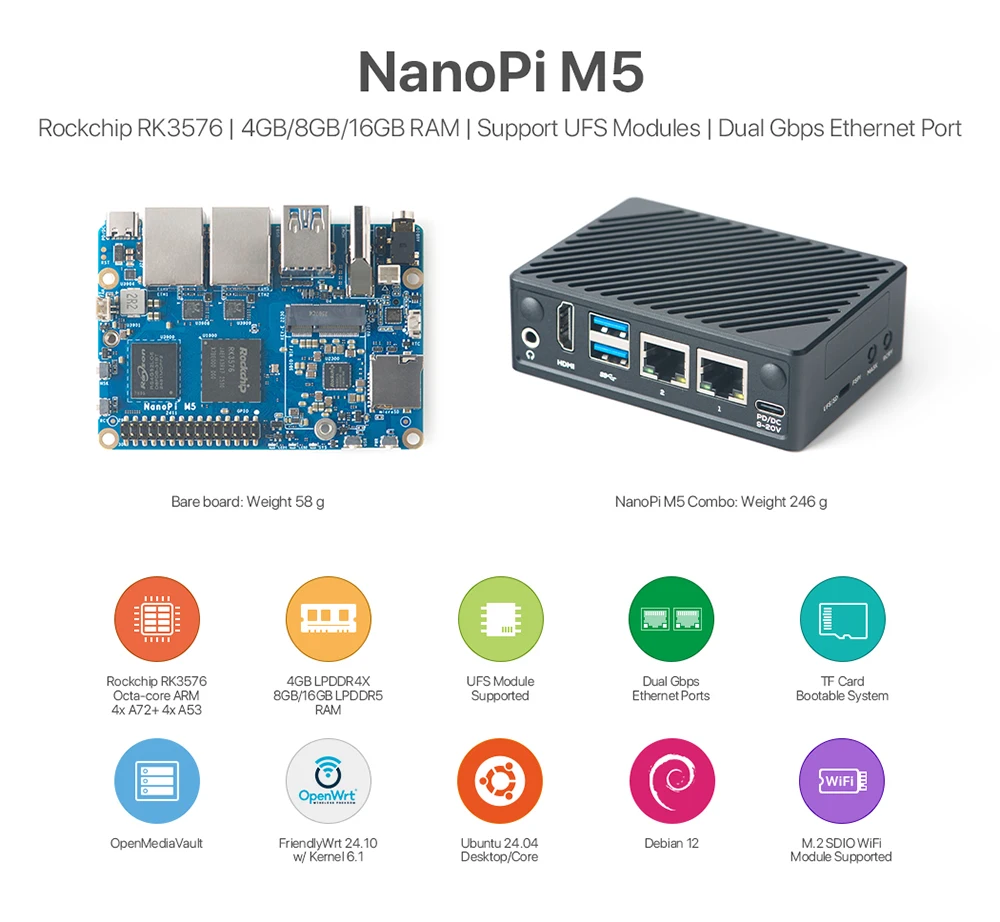
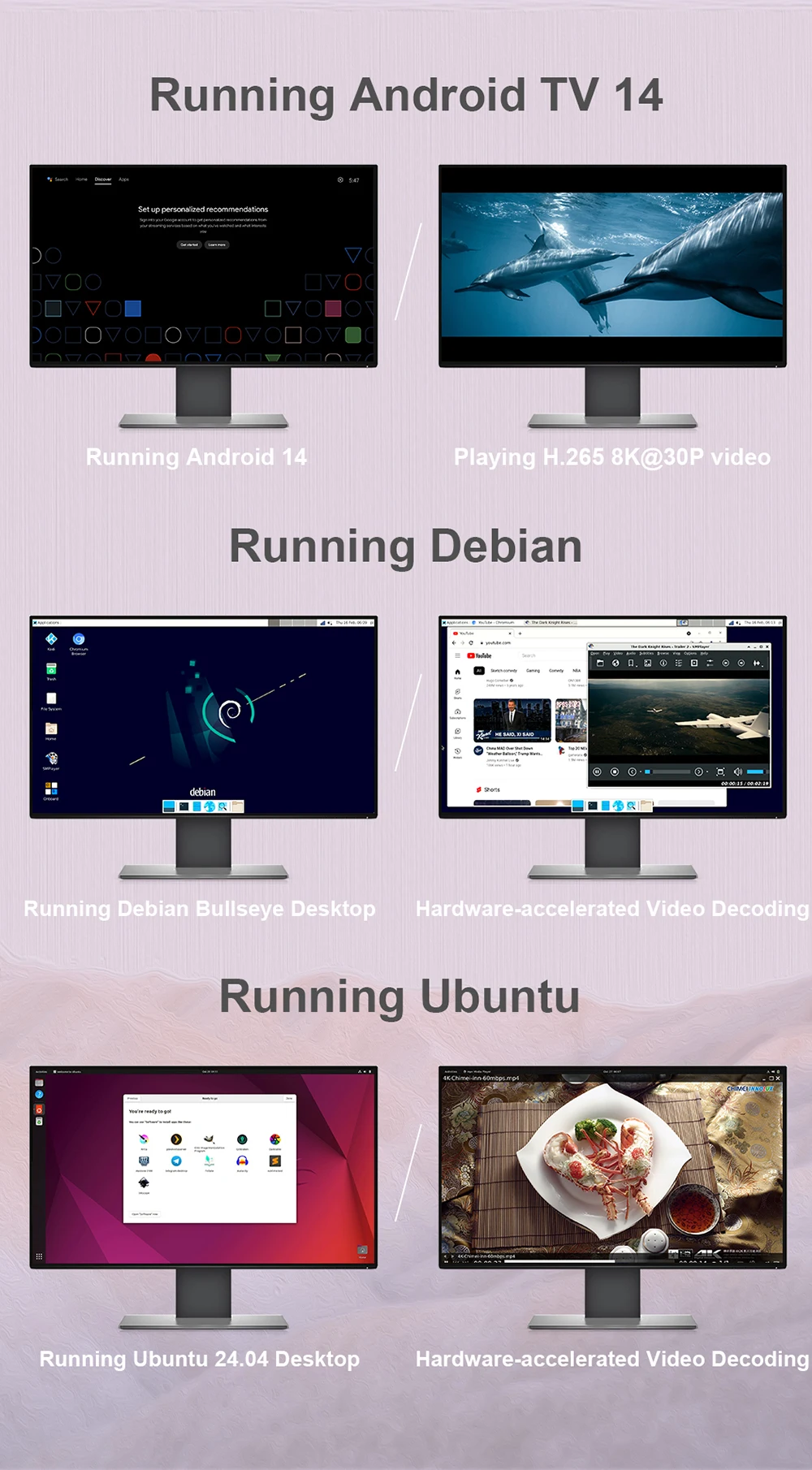
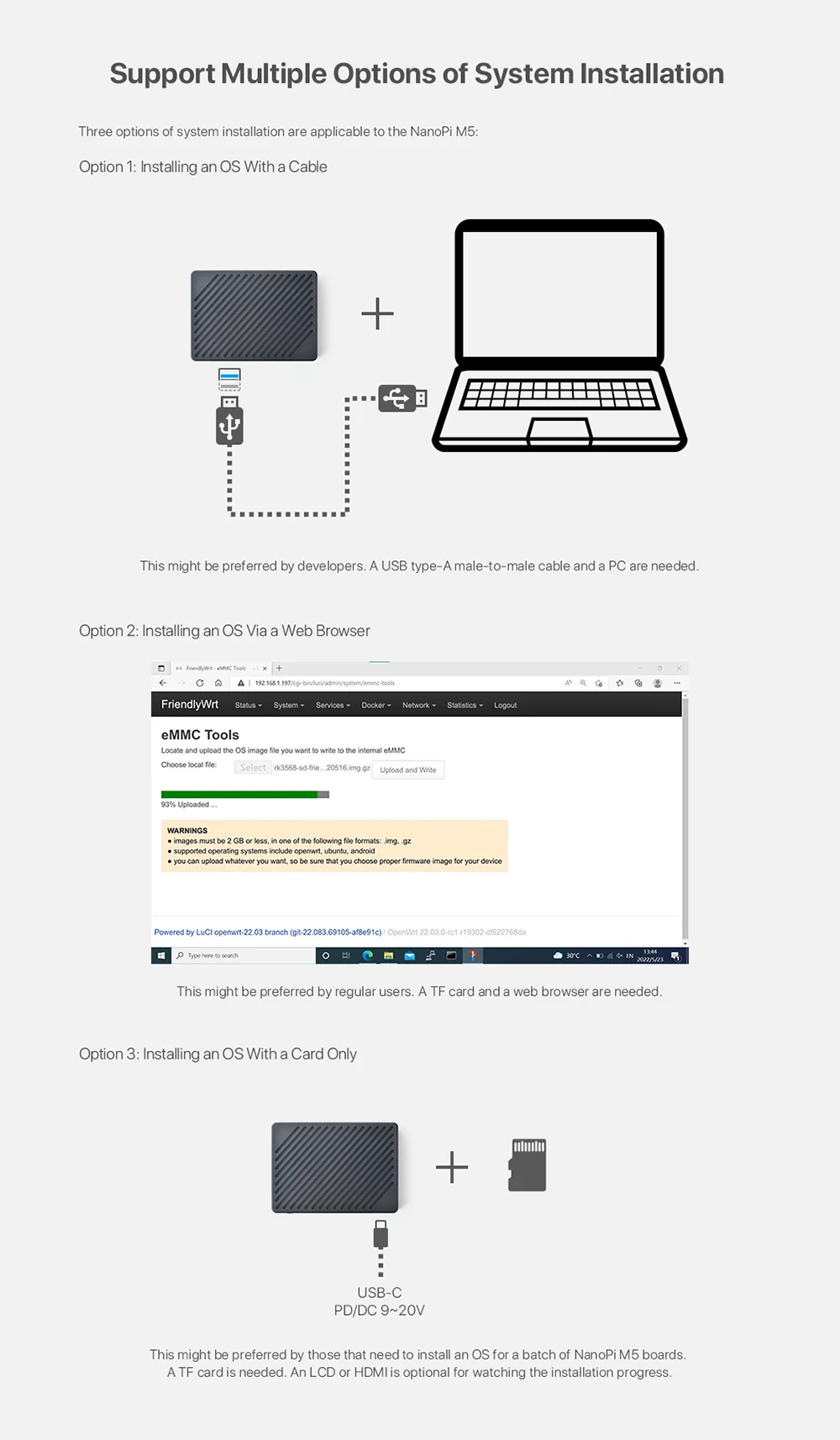
The NanoPi M5 (as "M5") is an open-sourced mini SBC device, designed and developed by FriendlyElec.It is based on Rockchip RK3576 SoC, with 32-bits LPDDR4X/LPDDR5 RAM and UFS 2.0 storage(optional). It supports booting from TF cards and is compatible with a wide range of operating systems, including Android 14, Debian, Ubuntu, FriendlyWrt, Buildroot, OpenMediaVault, and more. It is also fully compatible with headless systems.
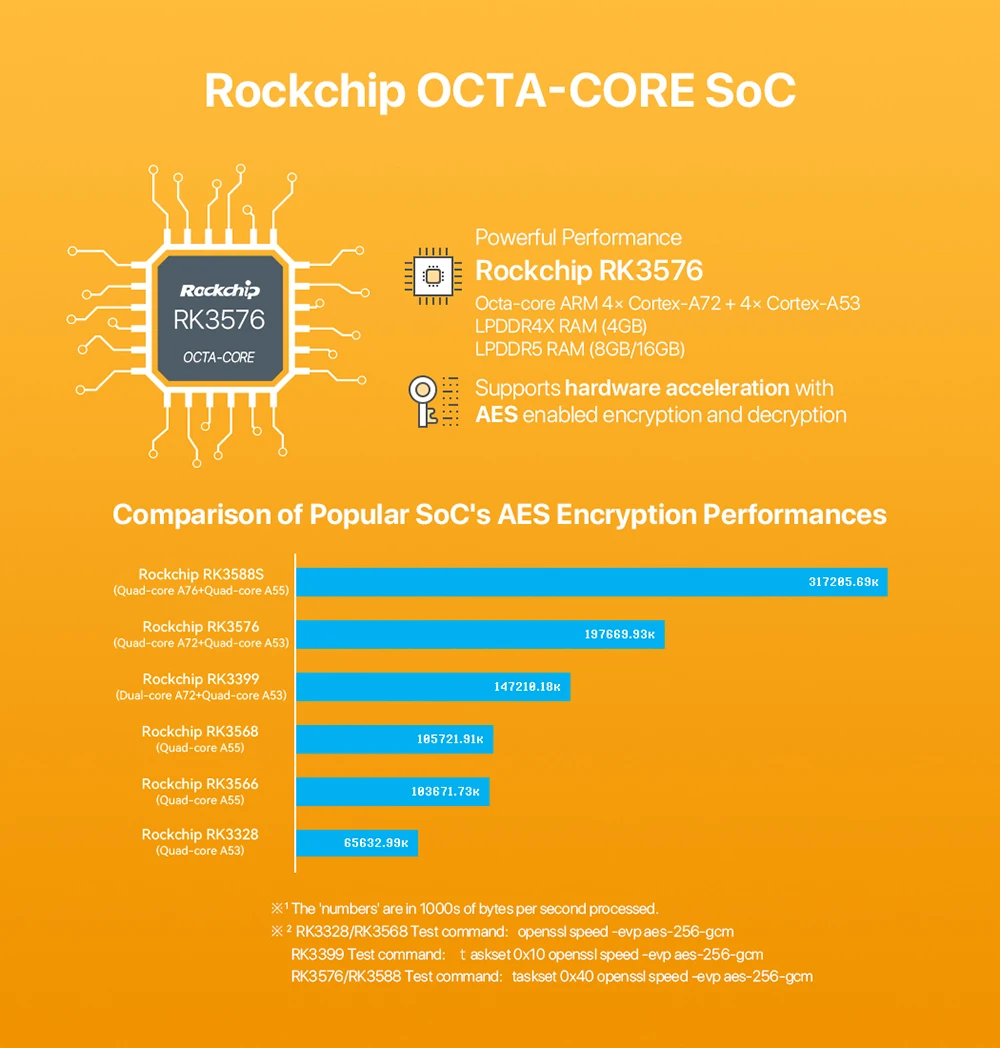
The RK3576 is an 8-core 64-bit processor featuring a powerful architecture with 4× ARM Cortex-A72 cores and 4× ARM Cortex-A53 cores. It is equipped with an ARM Mali G52 MC3 GPU and a 6 TOPS NPU, ensuring excellent graphics performance and AI processing capabilities. The RK3576 supports advanced video decoding and encoding, including 8K at 30fps and 4K at 120fps decoding (H.265/HEVC, VP9, AVS2, and AV1), as well as 4K at 60fps decoding (H.264/AVC) and 4K at 60fps encoding (H.265/HEVC and H.264/AVC). This makes it an ideal solution for high-performance multimedia and AI applications.
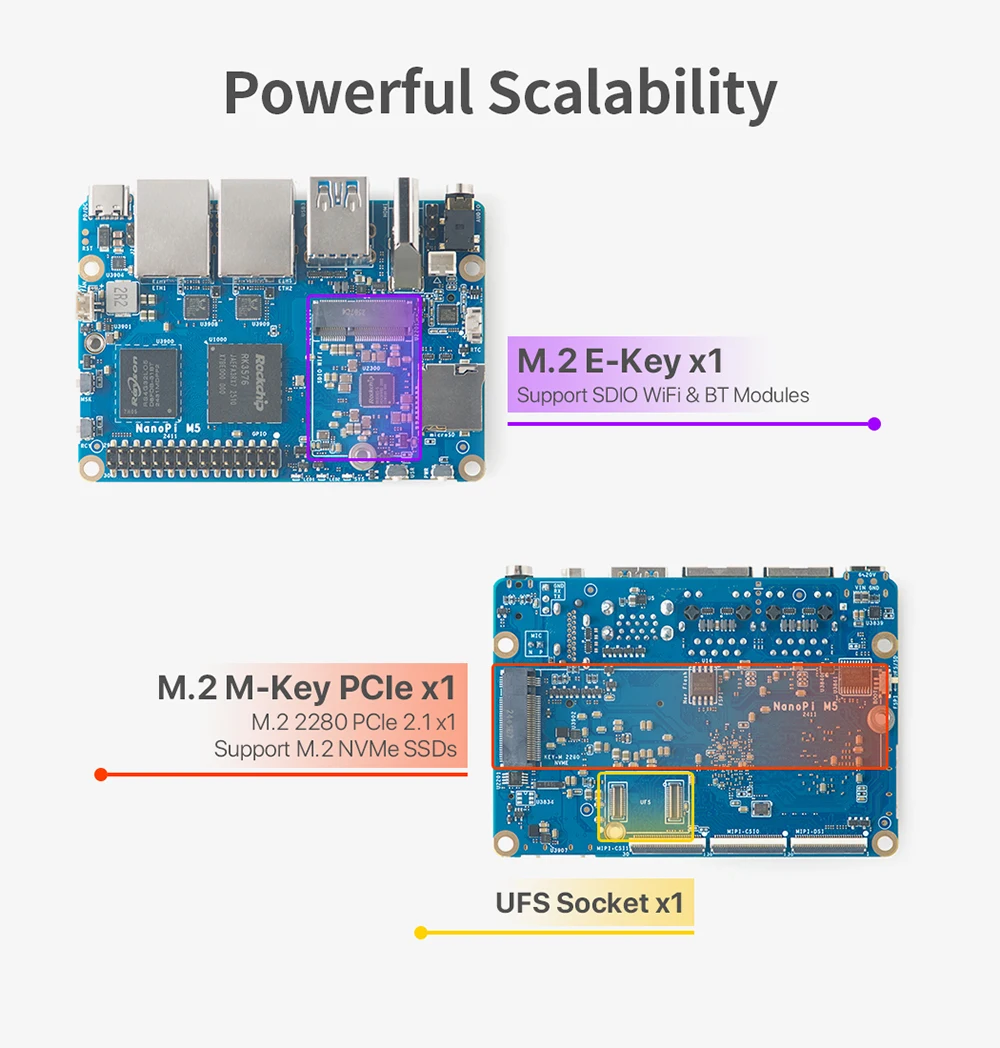
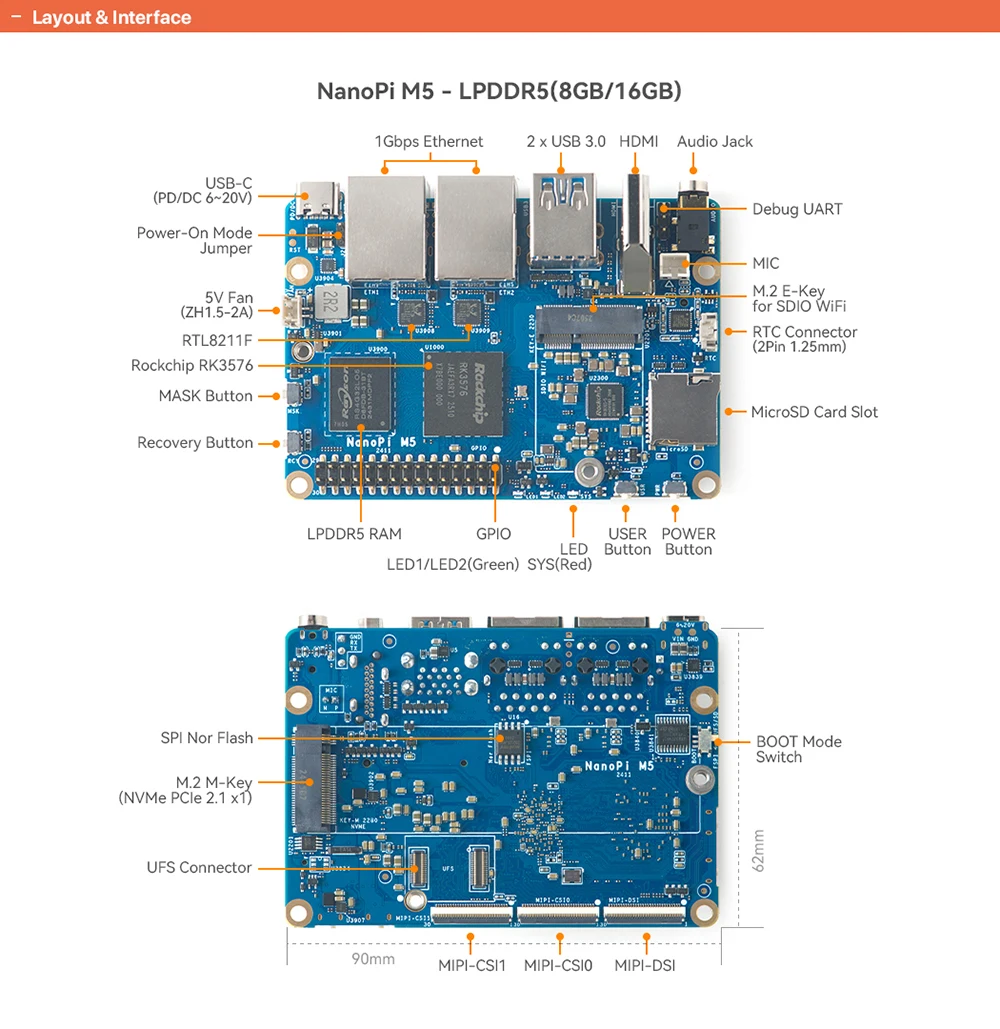
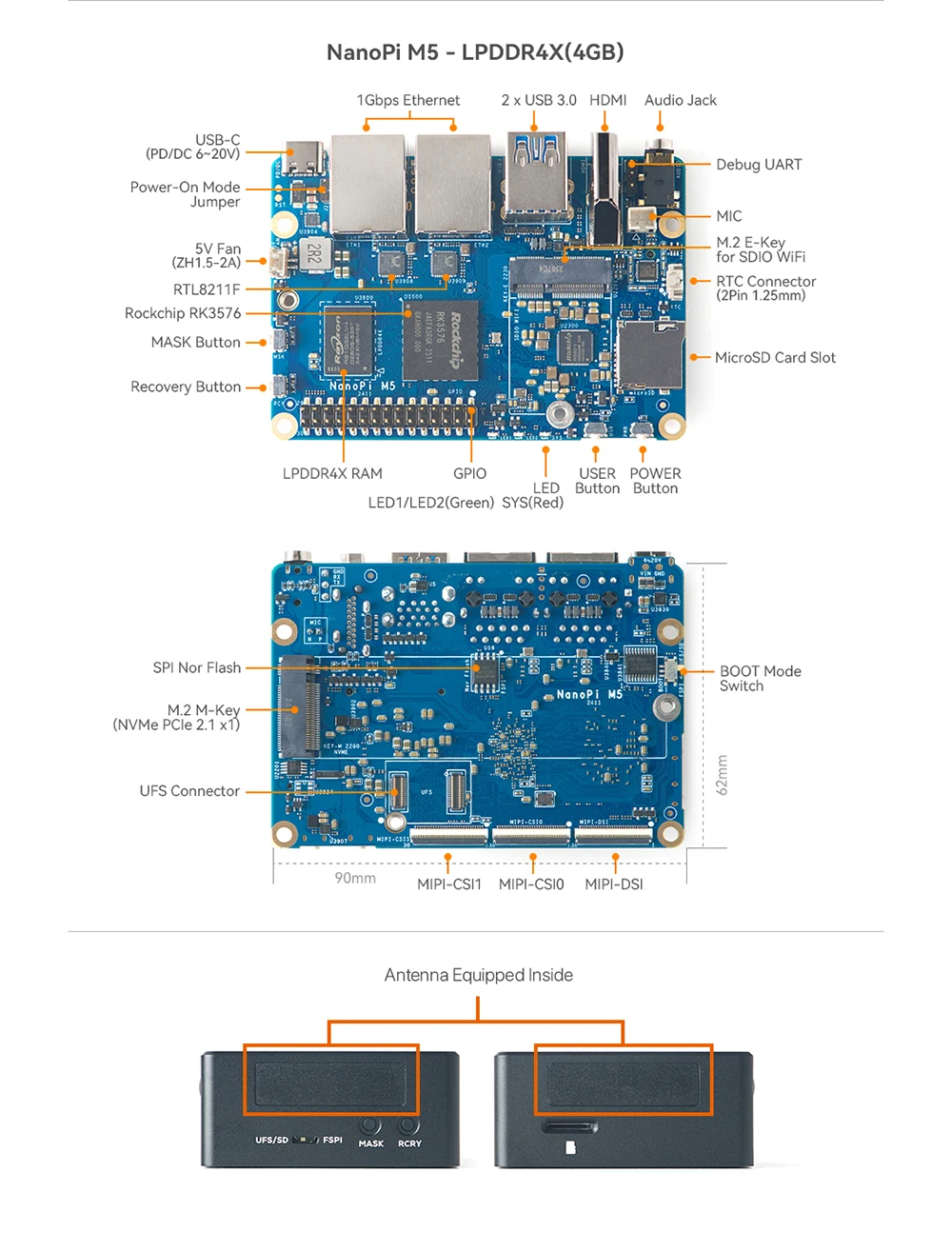
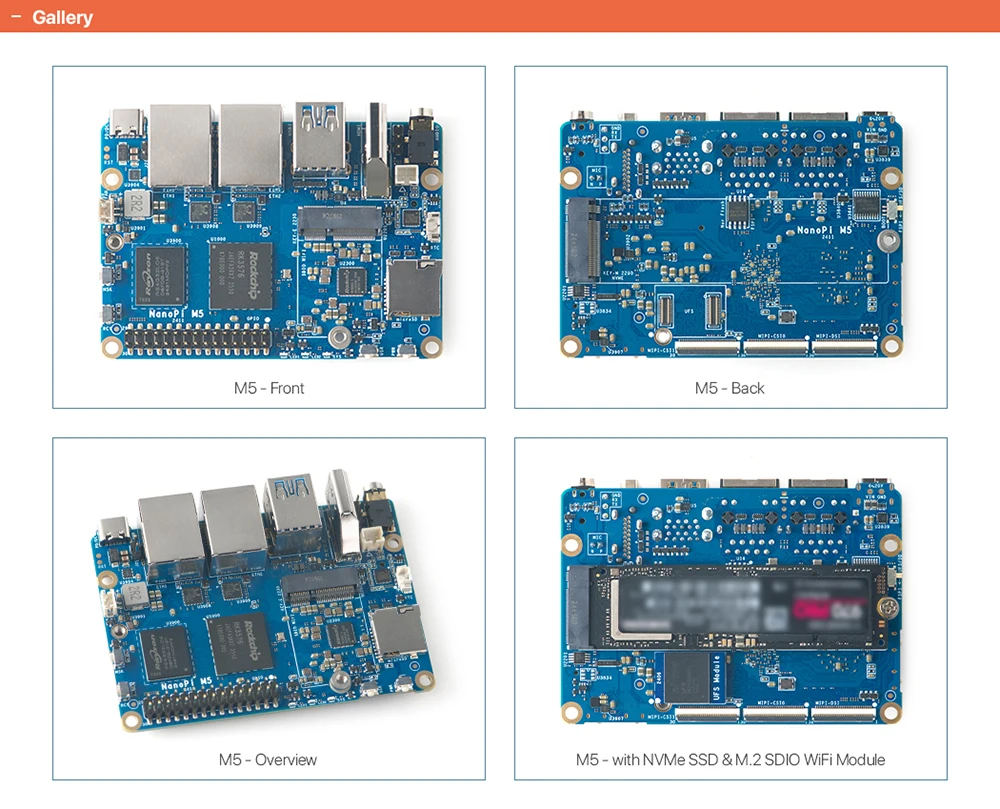
The NanoPi M5 offers rich hardware resources in a compact 90 x 62 mm form factor, featuring a wide range of interfaces, including M.2 NVMe port, USB 3.0 ports, MIPI-CSI, MIPI-DSI, an M.2 SDIO socket and a 30-pin header is provided to expose hardware resources for secondary development, including interfaces such as GPIO, I2C, I2S, PWM and SPI, It also has one HDMI port.
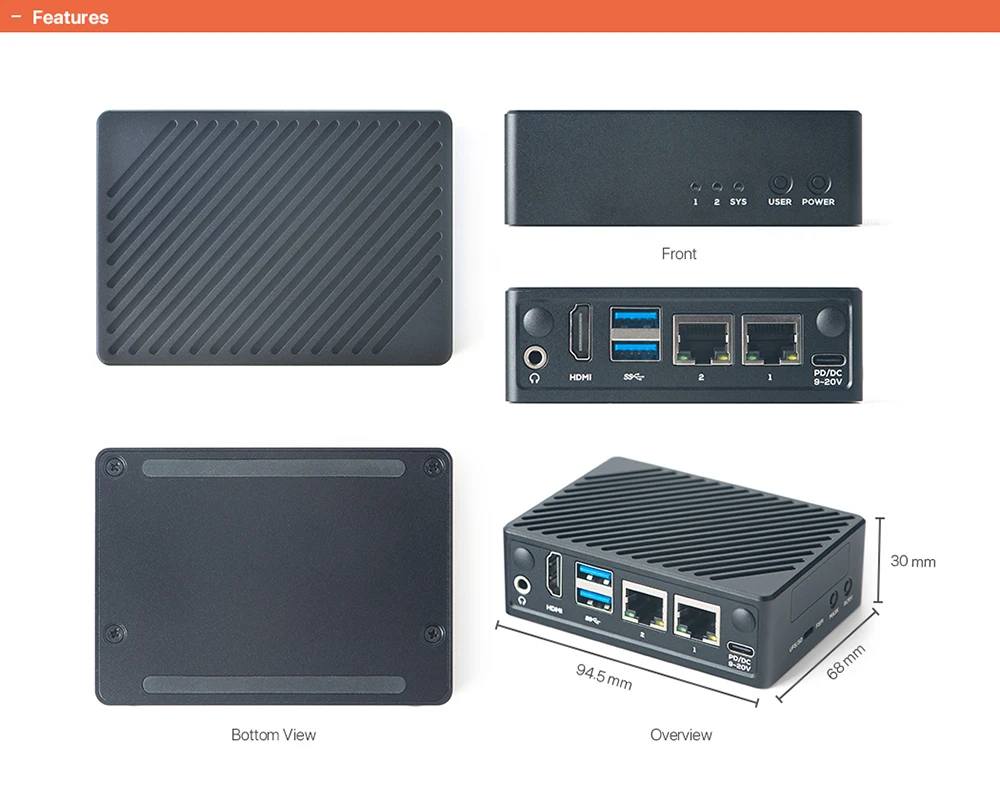
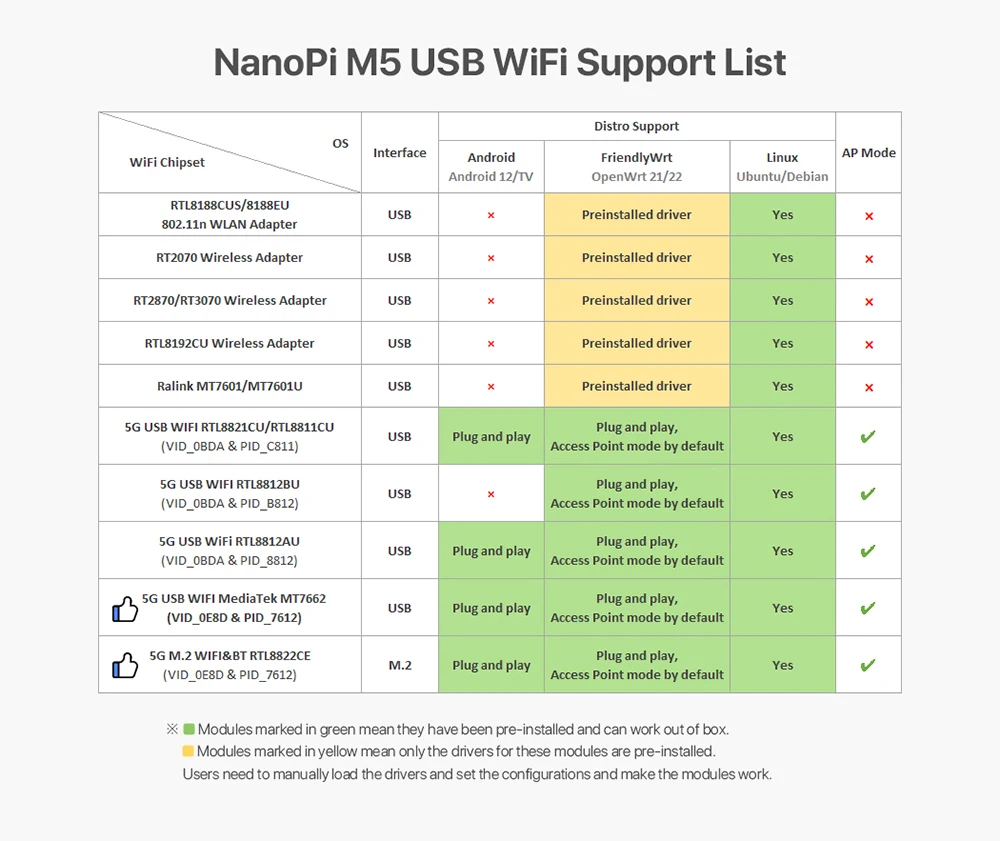
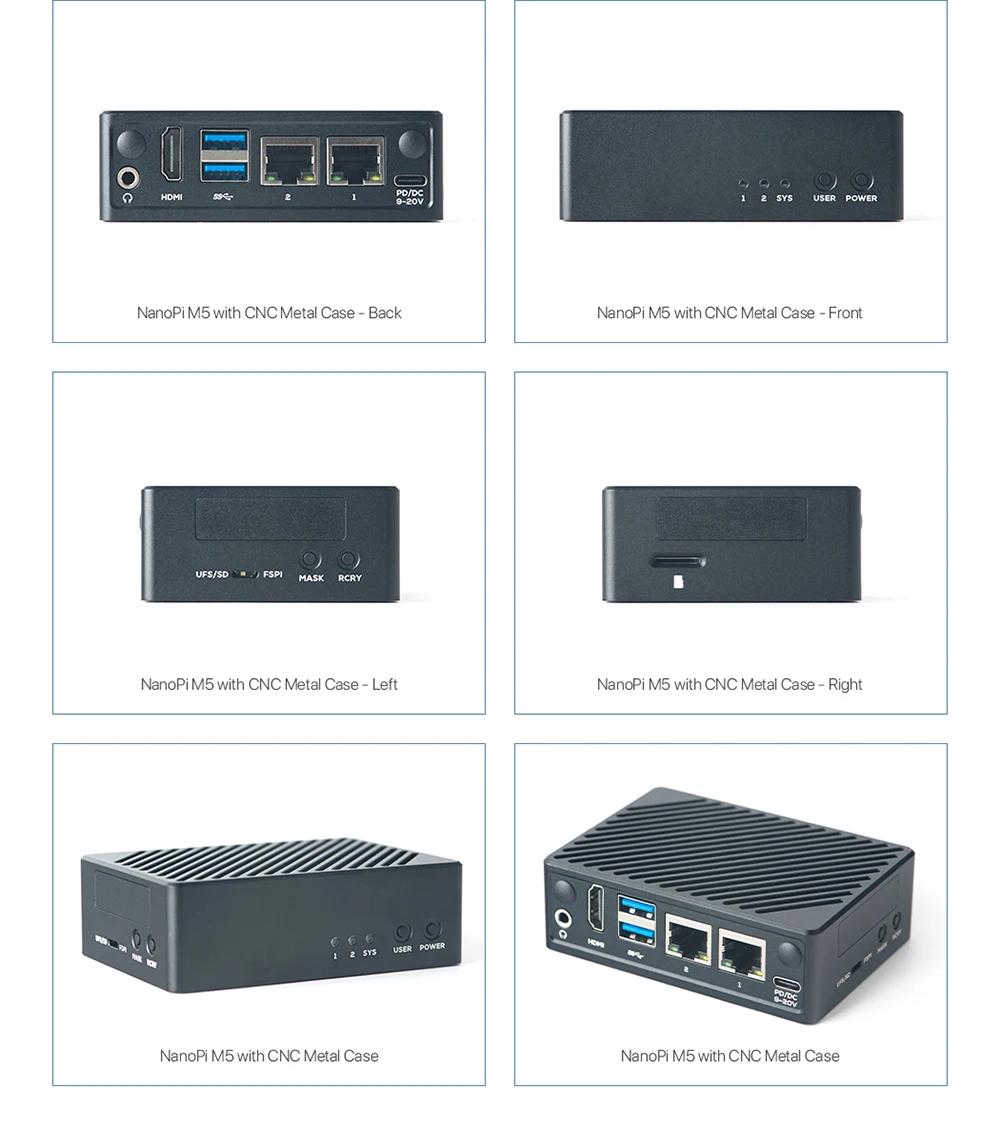
The NanoPi M5 supports USB type-C power delivery. FriendlyElec has released a carefully-designed custom CNC housing for it.
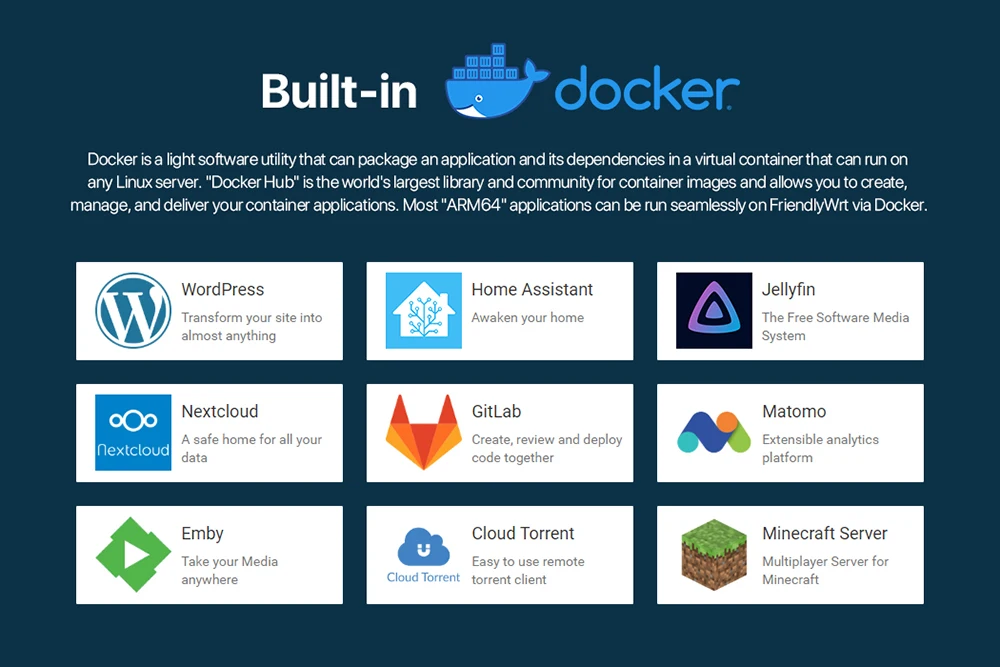
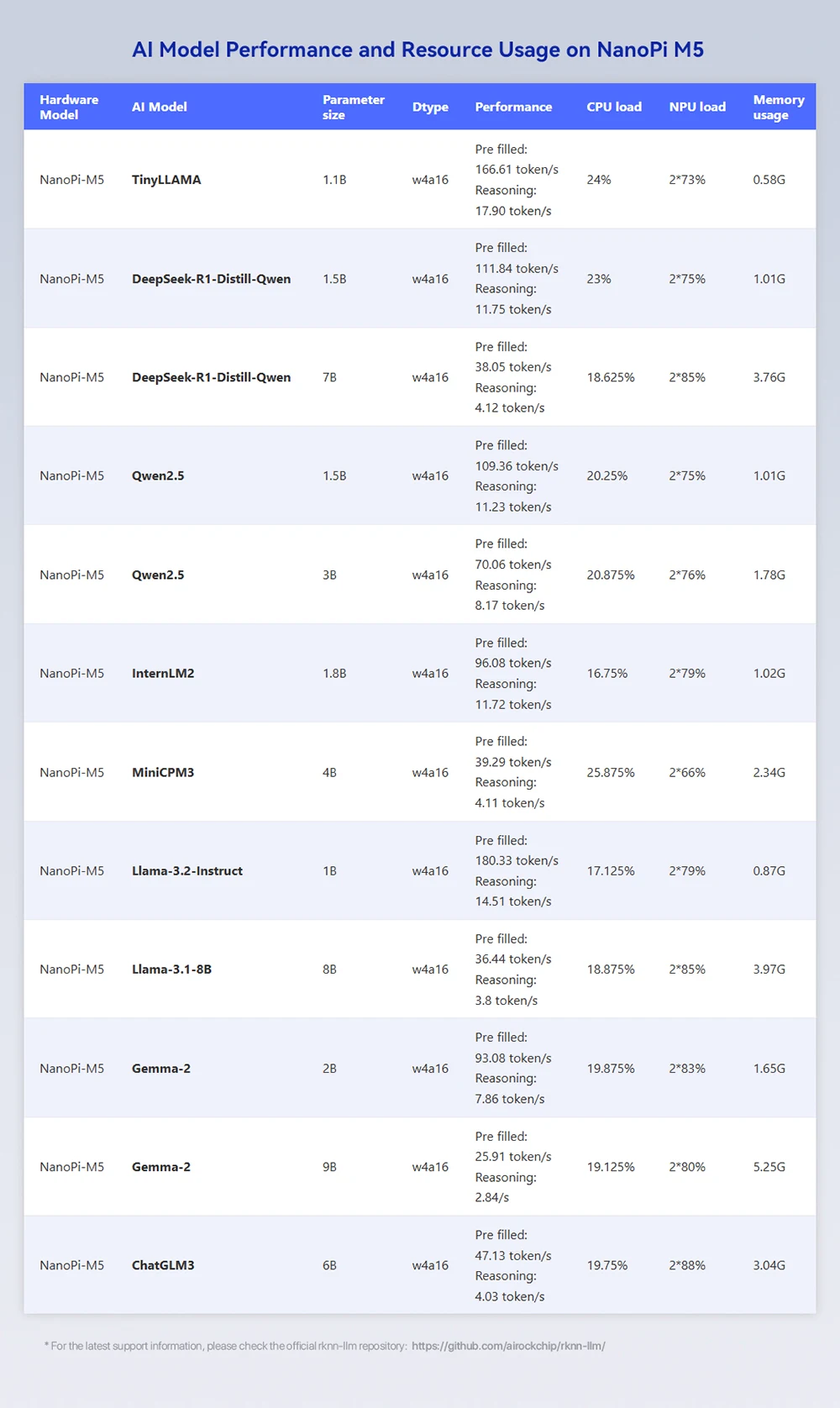
All in all, the NanoPi M5 is a versatile board featuring multiple Ethernet ports, light NAS capabilities, and video playback. It is an excellent choice for deploying AI applications locally, supporting inference for large AI models. Additionally, it supports Docker applications, making it an ideal platform for developers working on advanced solutions.



SoC |
Model: Rockchip RK3576 |
CPU |
Cores: 4x Cortex-A72 + 4x Cortex-A53 Frequency: Cortex-A72 up to 2.2 GHz, Cortex-A53 up to 2.0 GHz |
GPU |
ARM Mali-G52 MC3, supports OpenGL ES 1.1, 2.0, 3.2, Vulkan 1.2, and OpenCL 2.0 |
VPU |
8K@30fps H.265/VP9 video decoder, 4K@60fps video encoder |
NPU |
6 TOPS*@INT8 supports INT4, INT8, INT16, FP16, BF16, TF32 mixed operation |
RAM |
LPDDR4X(4GB) / LPDDR5(8GB/16GB) |
Storage |
On-Board 16MB SPI Nor flash Supports microSD up to UHS-I Supports UFS 2.0 flash module Supports M.2 M-Key 2280 NVMe SSD (PCIe 2.1 x1) |
Connectivity |
2x 1Gbps Ethernet ports with RTL8211F PHY chips Supports M.2 SDIO Wi-Fi/BT module |
Audio |
3.5mm audio jack for stereo headphone output 2.0mm PH-2A connector for analog microphone input |
Video Input |
2x 4-Lane MIPI CSI-2 D-PHY v1.2 interfaces |
Video Output |
Standard HDMI Type-A output port
• Supports HDMI 1.4 and HDMI 2.0 operations
• Supports up to 10 bits Deep Color modes
• Supports up to 1080p@120Hz and 4096x2304@60Hz
• Supports 3D video formats 4-Lane MIPI DSI-2, compatible with MIPI D-PHY v2.0 or C-PHY v1.1 |
USB |
2x USB 3.2 Gen 1 Type-A ports |
Pin header |
30-Pin 2.54mm GPIO header
• Supports up to 2x SPIs, 4x UARTs, 3x I2Cs, 1x SPDIF, 5x PWMs, 20x GPIOs 3-Pin Debug UART 2.54mm header, 3.3V level, 1500000bps |
LED |
SYS LED(Red) LED1(Green) LED2(Green) |
Button |
MASK Button for UFS update
User Button
Power Button
Recovery Button |
Others |
2-Pin 1.27/1.25mm RTC battery input connector for low power RTC IC HYM8563TS 5V Fan connector(ZH1.5-2A) Boot mode switch Power-On mode jumper |
Temperature |
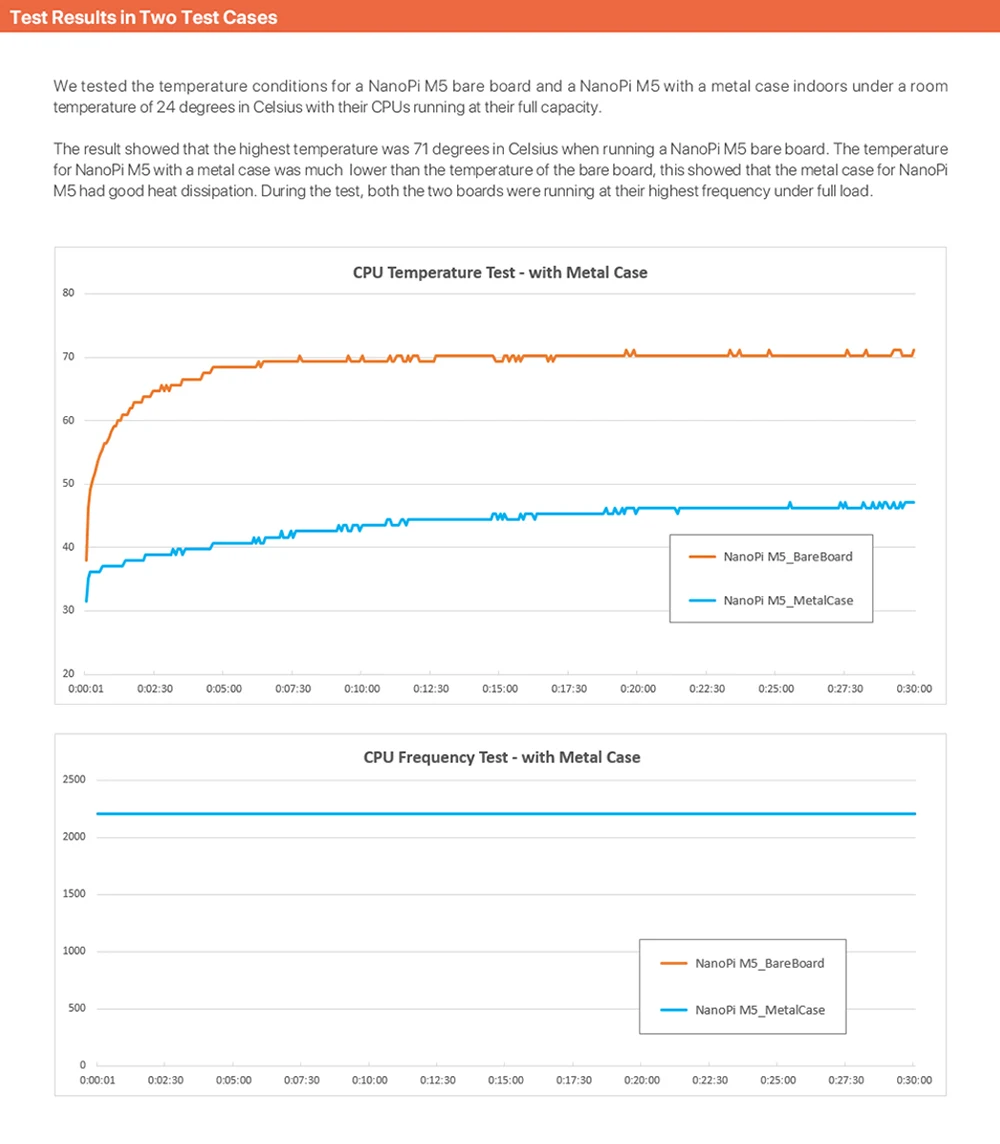
Ambient Operating Temperature: 0℃ to 70℃ |
Power Supply |
USB-C 6V~20V power input, supports PD and DC |

OS Support |
Alpine Linux
Android 14 Tablet
Android 14 TV
Buildroot
Debian 12 Core
Debian 11 Desktop
FriendlyWrt 21.02
FriendlyWrt 23.05
FriendlyWrt 24.10
OpenMediaVault
Proxmox VE
Ubuntu 20.04 Desktop
Ubuntu 24.04 Core
Ubuntu 24.04 Desktop
|
Kernel version |
Linux-6.1-LTS
U-boot-2017.09 |
|
*The firmware is continuously updated, refer to the actual version provided by the WiKi. |

PCB |
8-Layer ENIG |
Weight |
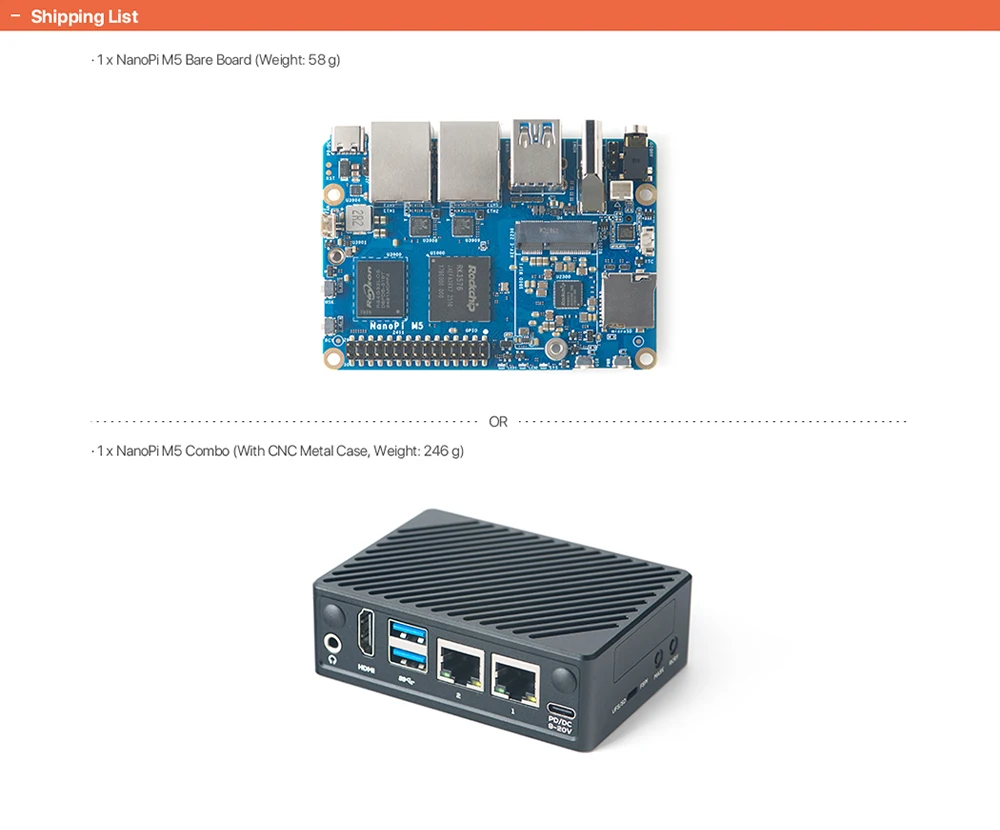
58g(without Case) / 246g(with Case) |
Dimension |
90x62x1.6 mm(without Case) / 94.5x68x30 mm(with Case) |
Payment